
The more cameras, the merrier – this appears to be the Vivo V17 Pro smartphone pitch, which includes six cameras.
But it is not just about the number of cameras. Anchoring the Vivo V17 Pro four rear cameras is a 48-megapixel (MP) main camera for high-resolution photos. But I recommend utilizing the default Photo mode, which produces better-looking 8MP photos utilizing the pixel-binning technique instead of using 48MP photos.
While the 8MP photos display some noise when zoomed in, I am impressed by their color imitation, dynamic range, and details. The ultra-wide back camera provides noisier pictures but continues to be respectable for cultural network and Internet usage.
For low-light images, the V17 Seasoned includes a long exposure Evening method that takes respectable photos. While these photos look smeary when zoomed in, colors look organic, and features are not overblown.
The unit does fairly well in exceptionally low-light conditions. It captures details that aren’t visible to my attention, though the photos themselves are not also usable.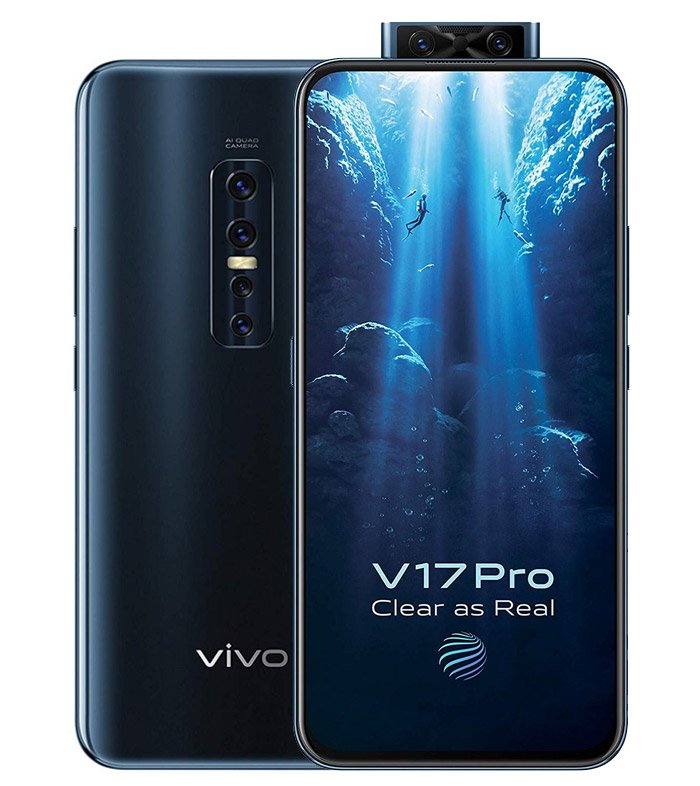
The camera software, however, takes some getting applied to. For example, the bokeh (background blur), ultra-wide and macro choices are concealed behind a circular icon. The Face mode also does not permit bokeh by default, unlike other camera applications – I have to pick bokeh by going on the round icon manually.
The V17 Pro has two top cameras (a 32MP major camera and an 8MP ultra-wide camera) in a pop-up component that rises smoothly from the phone.
While I recognize the wider reach of the ultra-wide top camera, especially for class photographs, I am not a big fan of the principal selfie camera. Despite turning off all the wonder and facial-enhancing effects, the photos were taken by the leading camera still look artificially smooth and overly processed. There is also a good amount of noise.
However, the pop-up camera module enables the V17 Pro to provide an all-screen facade with slim black borders around the display. Completing this modern look can be an in-display fingerprint sensor that’s quick and accurate while the engineering currently allows.
That way, the display is smooth and maybe not rounded at the edges, which should lower unintended monitor touches. But its glass straight back is incredibly rounded and is rapidly included in fingerprint smudges.
These fingerprints are obvious on my evaluation set’s bright glass straight back only when considered at an angle. Moreover, the V17 Seasoned is not as slick as some other glass-backed models.
Another plus place for the display is, so it uses Oled engineering instead of LCD. That indicates it could help an always-on display setting that shows enough time, date, and the battery indicator. This screen looks vibrant and immersive. And while it is not the brightest I’ve tested, it is bright enough to be properly used outdoors under the sun.
Despite its pop-up camera module taking on a considerable chunk of space at the surface of the phone, the V17 Pro manages to accommodate a 3.5mm audio jack. But it generally does not have a microSD card slot, though its 128GB internal storage may suffice for some users.
About the Author