
There was once a very fascinating statement produced by a now popular military historian and thinker. He served as a common in the Italian army in the 1920s and his name was Giulio Douhet.
He made a statement that any new advancement in guns, and specifically he was talking soldier carried small arms gives the benefit to the army that is defending and not the one aggressing. That is to say more quickly speedy firing potential or accuracy, offering each sides have the same technologies offers the benefit to the entrenched position defending.
Okay so, if you would like to understand my references herein, I’d like to cite the following perform: “The Command of the Air” by Giulio Douhet, which was published with University of Alabama Press, (2009), which you can purchase on Amazon ISBN: 978–8173-5608-eight and it is primarily based and fundamentally re-printed from Giulio Douhet’s 1929 work. Now then, on web page 11 the author attempts to talk about absolutes, and he states
“The truth is that each development or improvement in firearms favors the defensive.”
Properly, that is exciting, and I searched my mind to try to come up with a for instance that would refute this claim, which I had trouble doing, and if you say a flame thrower, effectively that’s not really deemed a fire-arm is it? Okay so, I ask the following queries:
A.) Does this warfare principle of his hold accurate currently also? If each sides have the similar weapons, “smaller firearms” then does the defensive position usually have the benefit, due to the ability to remain in position without having the challenge of forward advancement? Would you say this principal could be moved from a “theory of warfare” to an actual “law” of the battlefield, just after years of history?
B.) If we add in – rapidly moving and/or armored platforms to the equation would the offense with the exact same fire-arm capability commence to have the benefit – such as the USMC on ATVs which are incredibly difficult to hit. Or in Springfield with Red, White and Blue American Flag Stock of an armored car, it is a defensive-offensive platform in and of itself. Thus, would the author be appropriate, as the offense is a defense in and of itself anyway?
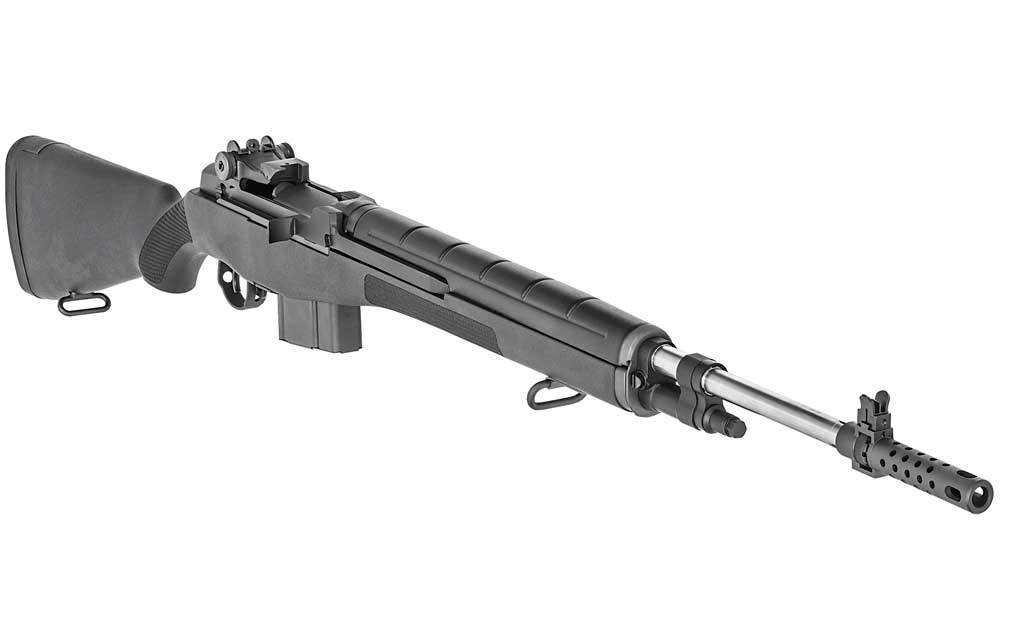
Are you starting to see the worth in this Douhet’s observation as it relates to advances in technologies on the battlefield? Indeed, I thought you may well, and hence, I sincerely hope that you will please take into consideration it and feel on it, see if you can come up with an instance exactly where that rule would not be applicable.
About the Author