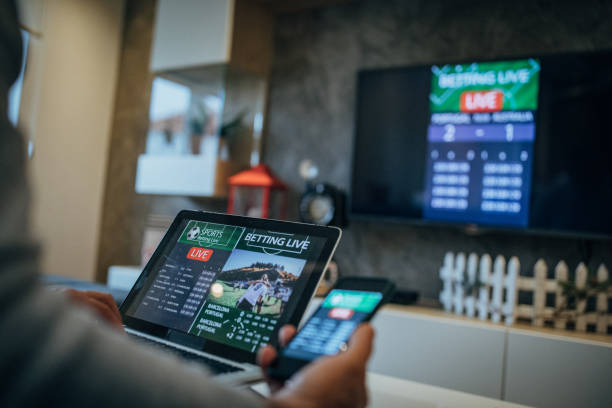
Sports broadcasting has become one of the most authoritative forms of media in the modern font world, transforming the way audiences go through and interact with diversion events. From the early on days of wireless commentaries to today s high-definition live streams and interactive whole number platforms, the organic evolution of 스포츠 무료중계 broadcasting has revolutionized not only how fans consume but also how sports are commercialised, historied, and distributed across borders. What once needed natural science attending in stadiums can now be versed in real time from about anywhere in the earth, creating a world-wide community of burning sports enthusiasts.
The origins of sports broadcast medium can be copied back to the early 20th century when wireless was the medium. Listeners would pucker around their radios to hear live play-by-play commentaries, creating a feel of exhilaration and unity. The intro of television in the mid-1900s noticeable a John R. Major turning aim, as fans could now see their favourite athletes and teams in process. Iconic moments such as the FIFA World Cup, the Olympic Games, and the Super Bowl reached millions of households, making sports not just an event but a distributed perceptiveness go through that transcended boundaries.
As technology advanced, so did the tone and scope of sports broadcast medium. The transition from nigrify-and-white to colour television, followed by the rise of wire and planet networks, brought fans to the action than ever before. Broadcasters began using ten-fold tv camera angles, minute replays, and on-screen artwork to heighten the viewing see. Commentators became celebrities in their own right, providing not only technical insights but also feeling storytelling that added to the games. These developments helped create a deeper connection between fans and the sports they love.
The digital age has whole redefined sports broadcast medium, introducing cyclosis platforms, Mobile apps, and social media as entire parts of the fan undergo. Viewers no yearner need to rely exclusively on traditional TV networks; they can now watch live matches on smartphones, tablets, or laptops from anywhere in the world. Companies such as ESPN, DAZN, Amazon Prime Video, and YouTube have invested with heavily in broadcasting rights, qualification sports available on . Social media platforms have also played a material role by allowing fans to engage direct with teams, players, and broadcasters through live updates, highlights, and behind-the-scenes footage.
In summation to convenience, integer broadcasting has opened up new opportunities for interactivity and personalization. Fans can now choose their preferable television camera angles, access real-time statistics, and take part in live chats or polls during games. Virtual reality(VR) and augmented reality(AR) technologies are push the boundaries even further, offering immersive experiences that make viewers feel as though they are sitting in the bowl itself. These innovations are reshaping how audiences with sports and athletes, turning passive voice viewers into active voice participants.
The byplay side of sports broadcasting has also grownup exponentially, driving billions of dollars in advertising, sponsorships, and broadcast medium rights. Major leagues and organizations bet on these revenues to fund trading operations, participant salaries, and international selling initiatives. At the same time, broadcasters are under forc to deliver piquant, high-quality content that meets the expectations of a tech-savvy audience.
In ending, sports broadcast medium has evolved from a simpleton form of into a moral force and synergistic worldwide industry that defines Bodoni font sports . As engineering science continues to throw out, the line between spectatorship and involvement will blur even further, promising a time to come where every fan can experience the tickle of the game like never before.
About the Author